

| The Assault | Timeline | Maps | Men of D-Day | Photos |

|
Escape Evasion C Report June 27, 1944 As we hit the French coast early on D-Day, our tow plane entered some smoke and began flying erratically. When the tow rope broke, we circled for a landing. Our first attempt drew machine gun fire so we turned away to crash land in a small field about 3 miles west of QUETTETOT (Manche), 0400, 6 June. Lt. KOSTIAK and I (Lt. LARKIN) were unhurt, as were the three crew members of the 57mm gun, Cpl. JASINSKI, Pfc. GLENN and Pvt. BARTON. We took the firing mechanism out of the 57mm gun, collected our equipment and all five of us walked to a wood about 1 mile away where we hid in dense bushes. We all wore impregnated ODs, long underwear, leggins and shoes, and carried full field equipment with rifles. We hid in the woods all day, that night and the next day. We ate ration and candy but were short of water. One of the gun crew crawled to a point where he could see the French destroying the glider. They were ten of them. The next night, I went up to the door of an isolated house while the four other covered the door from the bushes. A Frenchman answered my knock and said, "Americans?". When I said "Yes" he was overjoyed and at once offered to help us. His name was AUGUSTE, a farmer, about 25. He took us across the road to Xavier, a short, fat farmer, about 28, with a mody face and vadish hair. He showed us our position on the map, fed us, and we slept in the woods. The next day we returned for food and slept in the barn. The next afternoon (June 9), we were joined by F/O SILAS, CARSON (437 gp.) and a French helper VALENTINE, 6 feet 20, blonde curly hair, reddish face, sharp features, whose home is near RAUVILLE. That night Valentine led all six of us toward MORVILLE. By morning we were near L'ETANG-BERTRAND. A camouflaged German truck surprised us, but they failed to see us. We hid in a barn, which we left for an orchard when the germans came nearby for food. That night we met PAUL M------, short, thin, 24, blonde curly hair, was with French Intelligence and knows Col. Jack. Paul took us to MORVILLE and we hid to the NW of it. That night we were joined by 1st Lt. LAIRD (437 gp) and Pfc. BEN STEWART (82nd airborne). PAUL took all 8 of us through MORVILLE to YVETOT, assisted by two other French and many others in the bushes. Lt. CARSON disappeared on the way and the French were unable to find him after long search. We hid in a ditch where there was a large cache of equipment, largely german. Five men of the 101st under a S/Sgt. were reported being brought to join us, but the germans prevented our meeting. We moved to another ditch during the night and shells from allied guns fell in our vicinity. The French asked us to wear civilian clothes for safety, but since Cpl. JASINSKI ordered his men not to comply, the suggestion was abandoned. The next day we met 1st Lt. HITZTALER, a C-47 pilot shot down on D-Day. We hid in a barn where the French had a small arsenal of mines, guns and ammunition. We dined on German rations and cognac, and smoked Germans officers' cigars. We stayed here until 23 June, when a patrol of the 79th Div, under Lt. FOUCHE, entered the area. They were engaged by 3 German machine guns in the vicinity, following which we joined the American patrol. During the action fifteen French refugees, old men, women and children, who were hiding in a nearby barn, were shot by the Germans. We were taken to the Bn CP, thence by jeep to Ste Mere Eglise. On 25 June we returned to our group in the UK. James L. Larkin (June 27, 1944) ---------------------------------------------------------------- Jack Lawson, aboard C-47 #42-100803, was the tow pilot for the glider piloted by James L. Larkin. The C-47 was shot down shortly after crossing the west coast of the Cotentin Peninsula. To this day, the bodies of the radio operator and the crew chief remain missing. Dear Mr. Lawson August 29, 1944 Just recently I returned from Southern France and that is why I have beenso long in answering your letter. First I shall answer specifically the questions you asked me. We had an uneventful flight from England about half way across the channel and I was in radio communication with Jack continously about half way across the channel because we were the very last ship in the formation and were flying without lights, we lost the formation and there were four of us flying in echelon (4 C-47s and 4 Gliders. The flight that Jack's ship was part of). Shortly after that the flight of four we were in became separated and there were only two of us together, however we were on course and every thing wasO.K. We entered the coast of Normandy at a point directly west of Bricquebec flying toward St. Merelglize (draw a straight line from Bricquebec to St. Merlglize and you have the direction we were travaling - Southeasterly direction. Prior to our crossing the coast line we observed considerable flak but nothing close enough to get us-after crossing the coast there were tracer bullets coming at us from the ground but because it was enough of a job to fly our airplanes we don't know how many were coming - I should say we came into the field or fire from 3 or 4 machine guns and were above a smoke screen part of the ime. At a point about 2 or 3 miles west of Bricquebec, Jack started to descend through the smoke and our intercommunication system ceased to function at that point.Inside the smoke cloud Jack began a series of violent turns and climbs and dives at an altitude of about 1000 feet it was the utmost difficulty that I managed to follow him throught these manuvers which lasted about a minute or two- as far as I know both his engines were functioning properly and there was no fire- I caught a glimpse of him in the cloud. Finally he made an extremely violent diving turn to the left and before I could follow the rope broke (still in the smoke cloud). I let down through the smoke cloud in my ship (glider of course) and when we we broke through at about 500 feet there was no signs of Jack's or any other ship and we were immediately fired upon from the frount. By the Grace of God we landed safely and evaded capture for 15 days and got through safely to the American lines and it was then we first learned Jack was missing. I know you want the thruth regardless and I've known Jack a long time and he towed me on several practice missions and I asked for him as my towpilot on D-day and I know that some thing was wrong or he wouldn't have flown as he did (violent turns etc.) but that is the extent of my knowledge. I do think there is a good chance of his being alive too because a C-47 is a safe Airplane and comparatively easy to crash land. Another encouraging aspect (for you) is that Jacks co-pilot has been reported found dead and the fact that none of the others were found might indicate they were captured or are evading. I don't know circumstances regarding the Co-pilot's (also my good friend) death but apparently his grave was located. James L. Larkin (August 29, 1944) |
 Troop
Carrier
Troop
Carrier

 82nd
Airborne
82nd
Airborne
 101st
Airborne
101st
Airborne Utah
Beach
Utah
Beach
 Omaha
Beach
Omaha
Beach Gold
Beach
Gold
Beach Juno
Beach
Juno
Beach Sword
Beach
Sword
Beach 6th
Airborne
6th
Airborne

 U.S.A.A.F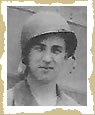
|
|