

| The Assault | Timeline | Maps | Men of D-Day | Photos |

|
Unusual Happening Report. 1. The following is a first person report by 2nd Lt. Richard B. Frost as told to the undersigned officer. Lt. Frost was pilot of A/C No. 43-15340 which he was forced to ditch in the English Channel during mission Freeport : We picked up our first fire just a few minutes after crossing the coast of the Cherbourg peninsula. It was just one lone machine gun, and except for one lucky hit its tracers flickered harmlesstly past our left wing. Just as I began to think that this trip would be just another milk run, three machine guns directly in front of us opened fire. They all seemed to have the range and were hitting us on the wings and tail sections. As we were very near to the DZ, our speed was very low making an excellent target for the Jerry gunners below. A few seconds later as I was about to give the red light to S/Sgts. Price, crew chief and Wallace, Quartermaster Corps, a standing waiting to throw out supplies we were carrying to the Paratroopers. When I gave the red light, it didn't take them very long to get rid of our load. As soon as the load was gone, we dove to the left and reached for the deck. We avoided ll houses or wooded sections that might hold enemy gunners and speeded toward the open barren mud flats. On the way out we saw very little fire and it looked as though we were going to be OK. Juste after crossing the coast on the way out, Lt. Gates (co-pilot) noticed that the oil pressure on the right engine was down to zero. We tried to save the engine as long as possible and use it to get a little altitude before it quit competely, but at 400 feet it went out altogether. We then tried to feather it and trim the ship up for a single engine journey home, but the prop failed to feather. We then turned our attention to the left engine and discovered that in spite of nearly full power and 25 hundred RPM we were not able to even hold the precious little altitude we had gained before the right engine went out. At this point I gave the order to prepare for ditching. Sgt. Price got the dinghies ready, and S/Sgt. Parsons, radio operator, sent out the SOS. The crash wasn't half as bad as I had expected. The tail wheel hit the top of the waves twice before the whole plane finally settled down for the last time. By the time I was free of the seat, Lt. Gates had the escape hatch off and was going thru it. I started to follow, but a glance in the rear assured me that we had plenty of time to go out that way and to help with the dinghies. I called to Lt. Gates to come back, but he must not have heard me as he continued down the fuselage to the left wing. Upon looking out of the escape hatch, I noticed that the right engine was completely gone. It is still doubtful in my mind whether it came off in the crash or in the explosion just prior to the crash. Lt. Col. Owens, who watched the whole thing, claimed to have seen it blow off. Also Lts. Middelebrooks and Debord said they saw a lot of smoke and the explosion from the right engine before the crash. All I know for sure is that it was gone after I hit the water. In the rear of the plane we all busied ourselves in getting the dinghies afloat. Sgts. Price and Wallace floated out in one, and Sgt. Parsons and I gotinto another. The third dinghy we attempted to get to Lt. Gates on the wing of the ship. Gates then jumped into the sea and grasped it only to be swept under the bobbing wing of the still floating plane. The wing struck him several times on the head causing him to lose his hold and float out to sea. His Mae West had been inflated before he jumped off the wing. Parsons, although suffering from shock, lacerations above the eye and a bad bump on the head that he had received during the crash, and Iat once got out the oars in a vain attempt to reach Lt. Gates. After an hour of desparate rowing against high seas and tide, we lost sight of him and finally had to give it up as hopeless. At this time I used the contents of the first two aid kits I'd taken from the plane on Parson's eye. He was now too weak and exhausted to even move from his reclining position on the raft. The courage he had shown during this period was remarkable and far beyond anything one would expect of any man. After about 3 hours, some P-38's spotted us. They remained with us, circling and diving around our raft, until they were able to attract the attention of one of the RAF Air Sea Rescue launches and guide them to us. At the end o 4,5 hours in a dinghy, the rescue lauch finally reached us. Arnold H. Newman (17 June 1944) |
 Troop
Carrier
Troop
Carrier

 82nd
Airborne
82nd
Airborne
 101st
Airborne
101st
Airborne Utah
Beach
Utah
Beach
 Omaha
Beach
Omaha
Beach Gold
Beach
Gold
Beach Juno
Beach
Juno
Beach Sword
Beach
Sword
Beach 6th
Airborne
6th
Airborne

 U.S.A.A.F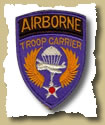
| |